Field notes on native iOS engineering, web products, and shipping with confidence.
A technical brief for a web project covers the problem, users, scope, constraints, budget range and success measures in two to four pages.
Put specs in real HTML tables, mirror them in matching markup and keep both current. Google documents no table rule for AI answers, so treat it as practice.
Local SEO for a service business comes down to an accurate Google Business Profile, consistent citations and honestly earned reviews.
Use Store with address, geo, phone, URL and hours on each location page. Skip Product merchant markup for cannabis: Google excludes it.
Assisted AI follows steps you define. Autonomous AI chooses its own. Use the least autonomy that works, then add more only when measured gains justify it.
A shared backend for SwiftUI and Next.js works when one auth provider issues the tokens and one Postgres schema generates the types for both clients.
Set up GA4 on a new website in the right order: property and stream, one Google tag, consent defaults before measurement, a few key events, then verification.
68.01% of US Google searches ended without a click in early 2026. What the number means, what Google says it takes to appear in AI answers, and how to measure demand instead of visits.
A site migration SEO checklist based on Google's guidance: map URLs, use 301 redirects, set canonicals, and monitor Search Console after launch.
Embedded menus slow dispensary websites by delaying LCP, shifting layout and busying the main thread. Targets and fixes, sourced from web.dev.
Both major vendors keep API data for up to 30 days by default. Zero retention needs approval, covers only some endpoints, and residency splits storage from processing.
Learn app store optimization basics: the character limits for names, subtitles and keywords, how screenshots rank, and the Google Play differences.
WCAG 2.2 adds nine success criteria to 2.1. For most web apps, six at Level A and AA need real engineering work: focus visibility, target size, dragging, authentication, redundant entry and help.
Serve AVIF or WebP with a fallback, never lazy-load the LCP image, and write alt text for people. What Google documents for each.
Dispensary loyalty programs can run on the web, by text, email or app. Each channel has its own consent and store rules. Here is what applies in October 2026.
Gate AI agent actions by reversibility: let reads run, log reversible writes, and require a person for sends, spend, deletes and publishing.
Fastlane turns the archive, sign and upload loop into named lanes your CI can run. Here is the setup that works: Bundler, an API key, match and pilot.
A marketing site and a SaaS dashboard need different rendering, caching and auth. Here is what changes and when one project can serve both.
Structure content for AI retrieval: one topic per heading, the answer first, and paragraphs that still make sense when a system lifts them alone.
Update posts that still match a search need, merge overlapping ones with a permanent redirect, and delete only what has no purpose and no better home.
Use one domain with a page per licensed store. Split into separate sites only when brands, owners or state rules truly differ.
AI agent cost comes from resent context and output tokens. Cache the stable prefix, trim context and route each step to the cheapest model that passes.
Most 2026 estimates put an iOS app at $15,000 to $50,000 for a simple build and $150,000 to $300,000+ for a complex one. Ranges and cost drivers.
A website costs about $300 to $3,000 for a landing page, $800 to $10,000 for a marketing site and $15,000+ for SaaS. See what moves each number.
Clicks fall when a Google AI Overview appears: 38% to 58% in 2026 studies. Here is what each study measured and what it cannot prove.
Link GA4 and Search Console, publish the report collection, and build a monthly SEO report from clicks, impressions, CTR, position and engaged sessions.
US dispensaries cannot run marijuana ads on Google or THC ads on Meta in 2026. Here is what the policies say and what remains open.
Build an LLM eval set before launch: define measurable criteria, mine real cases, add edge cases, validate your grader and gate releases by severity.
Build an offline first iOS app: keep a local store as the source of truth, sync with an outbox, pick a conflict rule and treat background fetch as a hint.
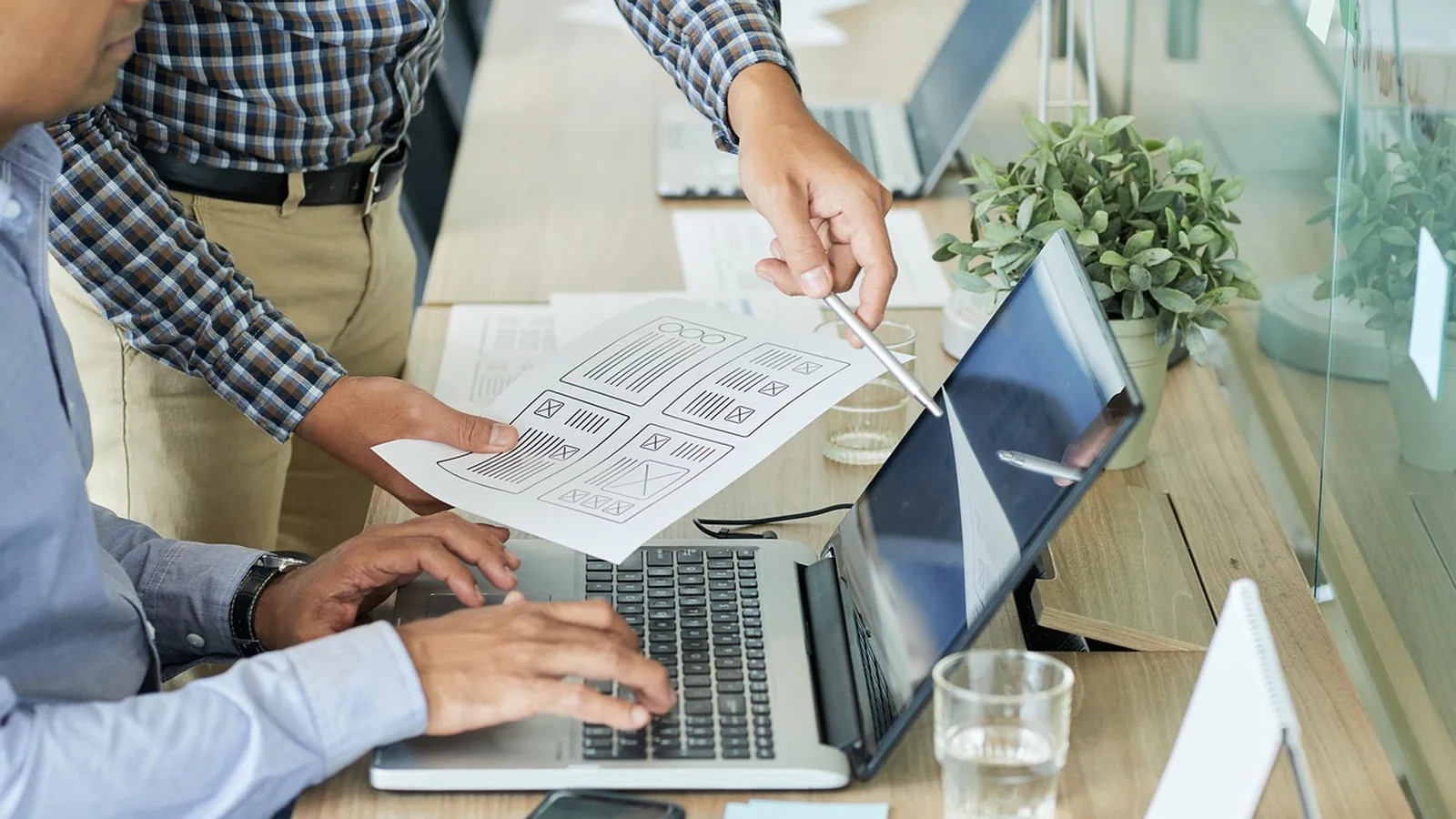
Figma to code handoff works when tokens, components and a ready-for-dev gate are shared artifacts. Here is how to set each one up.
Track AI citations by separating mentions from citations, freezing a prompt set, logging results, and treating tool data as directional.
Accurate lastmod dates, strong internal links and a fast server help new pages get crawled sooner. Here is what Google documents, and what it does not promise.
A dispensary site converts when the age gate, menu, speed and checkout work together. Here are 12 design elements, each tied to a primary source.
The right model for a feature is set by its quality bar, latency budget and cost ceiling, not by which model ranks highest overall.
Universal links on iOS and App Links on Android open your app from a tapped https link, with a safe fallback when the app is not installed.
A practical guide to Vercel deployments: preview environments, edge caching headers, and how to roll back a bad release in seconds.
GPTBot, ClaudeBot and PerplexityBot are not one bot each. Here is what every AI crawler does and how to control them in robots.txt.
Hreflang tells search engines which page serves which language and region. Here is the setup, a Next.js example, and the mistakes that break it.
What dispensaries can and cannot put on a Google Business Profile in 2026: category rules, disabled features, review policy and state compliance layers.
An AI content engine runs research, outline, draft and review as separate stages. The quality gate belongs before publish, not after.
iOS push notifications need a one hour APNs provider token, a payload under 4KB, and a permission prompt timed to a real user action, not app launch.
A performance budget is a numerical limit on load time and page weight, enforced on every pull request so a site stays fast instead of slowly regressing.
Entity SEO makes your brand a single, unambiguous entity to Google and LLMs. Learn the schema, sameAs and consistency tactics that drive AI citations.
B2B keyword research starts with the buying committee, not a tool. Here is how to find terms that match real search intent and commercial value.
License display, age gates, exact warning text and ad audience thresholds differ by state. A 2026 checklist for cannabis website compliance.
A practical method for scoping an AI workflow automation project: map the process by hand, sort each step into three buckets, and gate what can't be undone.
SwiftData fits most new iOS 17+ apps. Core Data still wins for older OS support, SQL-layer aggregate queries, and existing CloudKit setups.
A 2,000 page 2026 study shows which landing page elements actually move conversion, and which cosmetic changes barely matter.
Google dropped the FAQ rich result on May 7, 2026. Here is what still works for FAQPage schema and AI answer engines like ChatGPT and Google AI Overviews.
A schema markup guide to which structured data types still earn Google rich results in 2026, and why FAQPage no longer does.
Embedded iframe menus load fast but are often invisible to search engines. Native menus cost more to build and are the ones Google can actually index.
AI agent guardrails are permission scopes, approval gates and audit logs enforced outside the model. Here is how to set them up, and where teams go wrong.
WidgetKit covers widgets, controls and Live Activities, but only Live Activities run on ActivityKit, skip timelines and drop network and location access.
A database like Supabase fits when a developer owns every publish. A headless CMS fits when editors need independence or the content must reach another channel.
An answer capsule is a short, self-contained answer, about 120 to 160 characters, placed right after a heading so an AI assistant can quote it whole.
A small site needs two or three pillar pages, three to five contextual links per article, and a quarterly orphan page check, not enterprise tooling.
Cannabis delivery, pickup and online ordering rules vary by state. Here is what compliant checkout requires in Washington, New York and California in 2026.
RAG lets an AI assistant answer from your real documents, not a guess. Here is how it works, and why support and sales bots need it.
Apple ties over 40% of unresolved App Store rejections to one guideline. See the six that account for most rejections, quoted from Apple's own text.
Incremental static regeneration caches pages instantly and rebuilds them in the background. Here is how time-based and on-demand ISR work, and when to use it.
llms.txt is a proposed Markdown file that lists a site's key pages for AI agents to read. Here is the format, who actually uses it, and how to write one.
Programmatic SEO pages don't get penalized for being templated. They get penalized for offering no value per page. Here's how to build the template correctly.
Ranking for dispensary near me comes down to a verified, storefront only Google Business Profile, LocalBusiness schema and real reviews, not keyword stuffing.
MCP is Anthropic's open standard, launched in November 2024, for connecting AI agents to outside tools and data through one consistent interface.
Swift 6 strict concurrency turns data races into compile time errors. Here is the module by module process for migrating an existing app without a full rewrite.
Row level security is Postgres's built in authorization system. Here is how grants, policies and auth.uid() combine to keep tenants apart in a Supabase app.
Getting cited by ChatGPT, Perplexity and Google AI Overviews takes search fundamentals plus platform-specific authority, not a special AI file.
The 2026 Core Web Vitals targets are LCP under 2.5 seconds, INP under 200ms and CLS under 0.1, measured at the 75th percentile of real visits.
New York, Washington and California each define a cannabis website age gate differently. Here is what each regulator's text actually requires in 2026.
An AI agent is software that pursues a goal and completes multi-step tasks using tools, with real autonomy, unlike a chatbot that only answers questions.
In 2026, SwiftUI is the default for new iOS screens and rewrites, while UIKit still fits legacy code and a few uncovered APIs. Here is the decision rule.
For a new project in 2026, Next.js recommends the App Router. Here is what changes, what still favors Pages Router, and the caching pitfalls to expect.
Answer engine optimization (AEO) means earning a citation inside an AI generated answer, not just ranking a page. Here is what changes, and what does not.
Minnesota dispensary sites must meet age verification, ordering, advertising and accessibility rules. Here is what compliance requires in 2026.
A technical SEO audit checklist for Next.js sites: rendering strategy, metadata, sitemaps, Core Web Vitals, structured data and hreflang.
How we take a SwiftUI product from first commit to a clean App Store release: audits, bridges, and staged rollouts.