How dispensaries get cited by AI assistants for best dispensary searches, 2026
No switch gets a dispensary named the best in town by an AI assistant. Accurate listings, a crawlable location page and real reviews do the work.
No setting or paid placement makes an AI assistant name your dispensary as the best one in a city. Assistants assemble that answer from your Google Business Profile and other listings, your own website, reviews and mentions elsewhere. Your job is to make each of those sources accurate, consistent and easy to quote. This is dispensary AEO (answer engine optimization) in practice, and much of the evidence below is practitioner reporting rather than published rules, so each claim is labeled that way.
What Google says about AI answers
Google's documentation is the one primary source here, and it has no tricks in it. For AI Overviews and AI Mode, a page must be indexed and eligible to appear in Search with a snippet. In Google's words, "There are no additional technical requirements", and there are no special optimizations or AI-specific files to add. The page was last updated on December 10, 2025.
Three points from that page matter for a dispensary:
- No special schema is required. Existing structured data must still follow Google's guidelines and match the visible text on the page.
- Fundamentals still count. Google lists crawlability, internal links, text content and a good page experience.
- Business Profile is on the list. Google tells site owners to keep Merchant Center and Business Profile information current.
That last item bridges to local results. If your store's facts are stale in one place, an assistant has a reason to distrust all of them.
Why a best dispensary answer is hard to earn
Assistants recommend far fewer places than a map pack does. A report based on SOCi data, summarized by Search Engine Land, put the share of locations recommended at 1.2% for ChatGPT, 11% for Gemini and 7.4% for Perplexity. The same report put appearance in Google's local 3-pack at 35.9%. Treat these as one industry study, not a benchmark for your market.
Two further findings from that coverage are worth planning around:
- Reviews act as a filter. The report says assistants favor businesses with above-average review sentiment, and that a middling rating can still do well in classic local search but get left out of AI answers.
- Visibility does not transfer. Showing up in one assistant does not reliably carry over to another, so check each one on its own.
So the honest framing is this: you want to be an easy, safe choice for a system that names very few businesses.
Keep your profile and listings identical
Practitioners writing about local AI search repeat one point: assistants cross-check your website against your Business Profile, directory listings and reviews. A Search Engine Land piece on the website as source of truth recommends identical name, address, phone number and hours everywhere. It's anecdotal, but it costs little and matches Google's advice to keep Business Profile data current.
Make a single record of your legal-facing store name, street address, phone, hours and holiday hours. Then check every place that shows them:
- Your Google Business Profile.
- Your website footer and location page.
- Cannabis directories and general map listings.
- Social profiles that display hours.
Compliance shapes what you can put on the profile. Google's prohibited and restricted content page says uploaded content may not include "calls to action or offers for the sale of products or services" that are regulated. It also bars links to a landing page where restricted goods can be purchased, phone numbers or emails for purchasing them, and deals, coupons or pricing promotions. Images of menus are excluded. The page does not name cannabis, so confirm your case with Google before you rely on it. For a fuller walkthrough, see what a dispensary can and cannot list on Google Business Profile.
Give each location a page assistants can quote
Retrieval systems pull chunks of text, so your location page should state the facts in plain sentences. Put the address, hours, phone number, what the store offers by regulatory category and how pickup or delivery works in text, not in an image or inside an embedded menu frame.
Add LocalBusiness markup that matches that visible text. Google's LocalBusiness documentation, updated September 8, 2026, requires name and address. It recommends openingHoursSpecification, geo (latitude and longitude with at least five decimal places), telephone with country and area code, url and priceRange. Use the most specific subtype available for each location. Our guide to LocalBusiness and Store JSON-LD for dispensaries covers the code.
One trap: the same documentation says aggregateRating and review are for sites that collect reviews of other local businesses. Do not mark up your own store's star rating on your own page.
If you run several stores, give each its own page and its own Business Profile, as covered in multi-location dispensary SEO.
Reviews and specific detail
If reviews work as a filter, then your rating and the content of the reviews both matter. The coverage cited above reports that detailed reviews give an assistant usable reasons to recommend a business, while generic praise gives it little. You can't script this, and you shouldn't incentivize reviews in ways a platform bans. Ask every customer in the same neutral way, reply to reviews in plain language, and fix the problems reviewers name. Never post reviews on your own behalf.
Mentions on local news sites and community pages play a similar role. A page that names your store, your neighborhood and your city gives a system another independent source to check.
Test what assistants say about you
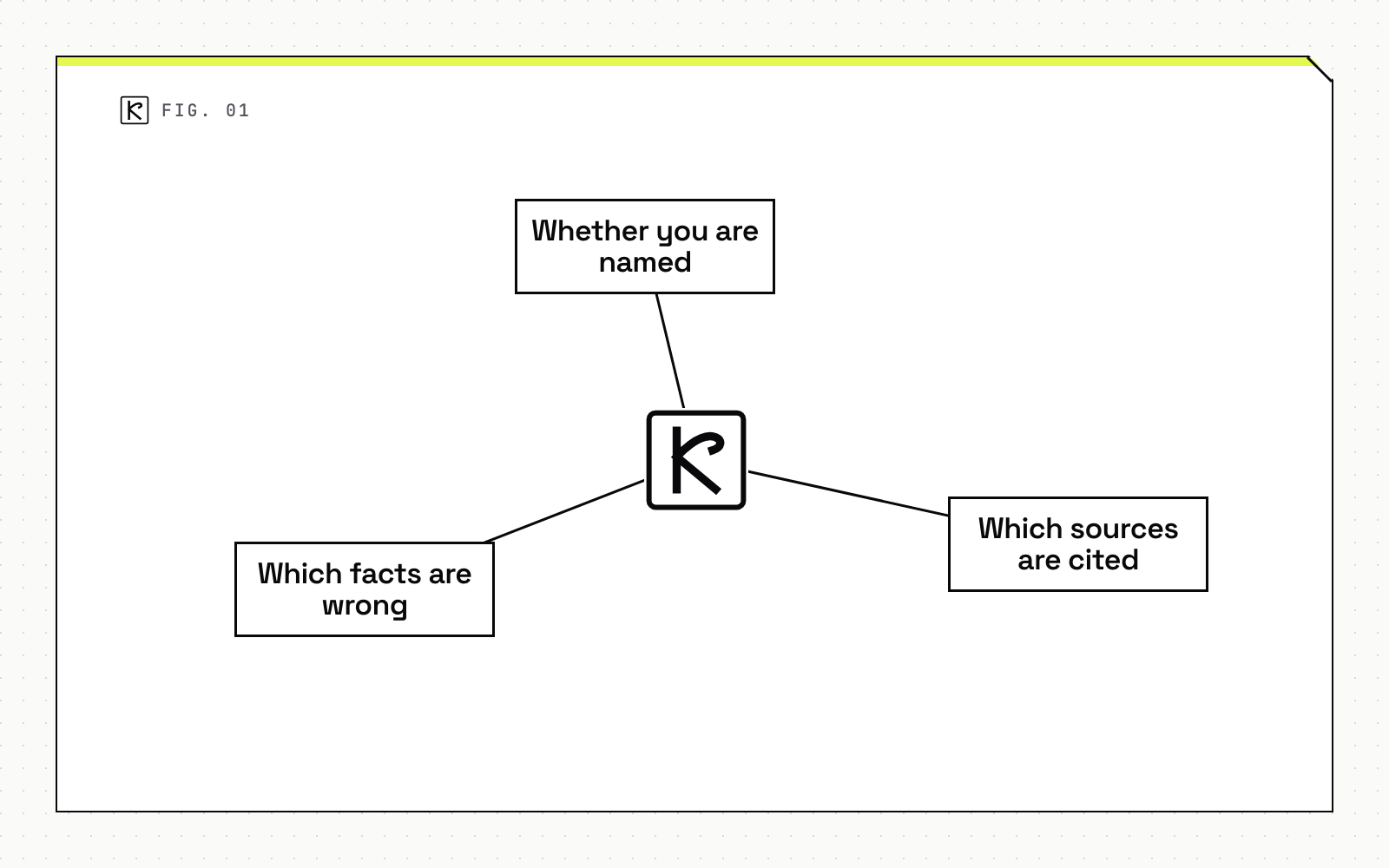
You can't rank-track an answer the way you track a keyword. Sample it instead. Once a month, ask each major assistant the question a customer would ask for your city, then log three things: whether you are named, which sources are cited, and which facts are wrong. Wrong hours or a closed-location error usually point back to a stale listing. Our guide to tracking AI citations and brand mentions describes a repeatable method.
Keep the test fair. Use a logged-out session and a neutral query, and record the date, because answers change.
What to do first
Start with the sources every assistant touches: make your Business Profile and website agree, publish a quotable page per store with matching LocalBusiness markup, and earn reviews that describe your store specifically. Then sample the assistants monthly and fix what they get wrong. Teams that want help with the site and markup side can look at Kallos Labs' SEO and AEO work.
Frequently asked questions
Can I pay to be recommended as the best dispensary by an AI assistant?
We found no source describing paid placement in assistant answers for local recommendations. Google's guidance says AI features need no special optimization beyond standard Search eligibility, so the work is accurate listings, a crawlable site and real reviews.
Do I need special schema to appear in AI answers?
No, Google says no special schema.org markup is required for AI Overviews or AI Mode. LocalBusiness markup still describes each location clearly, and it must match the visible text on the page.
Why does my dispensary show in Google Maps but not in ChatGPT?
Assistants recommend far fewer locations than the Google local 3-pack, and one industry study found visibility in one system does not reliably carry to another. Check each assistant separately and fix the inconsistencies they expose.
Can my Business Profile include a link to order or a discount?
Google's restricted content page bars calls to action, purchase links, purchase contact details and promotions for regulated products. It does not name cannabis, so confirm your situation with Google before adding them.