How to track AI citations and brand mentions in AI answers, 2026
Track AI citations by separating mentions from citations, freezing a prompt set, logging results, and treating tool data as directional.

Introduction
To track AI citations, keep two counts: how often an AI answer names your brand, and how often it links one of your pages as a source. Run the same fixed set of questions on a schedule, log both counts, and treat every number as a trend, not a measurement of exact traffic.
AI answers don't show up in a rank tracker, so you need another way to see them. If you've already worked on how to get cited by ChatGPT, Perplexity and Google AI Overviews, the next question is whether it worked. This guide covers the definitions, a manual method you can start today, what paid tools can and can't tell you, and how to report results without overselling them.
Mentions and citations are different metrics
A mention is your brand named in the text of an AI answer. A citation is a link to one of your pages as a source. Ahrefs, in its AI visibility audit guide (published October 30, 2025), defines mentions as "the number of times your brand is mentioned in AI responses" and citations as "the number of times your brand's website is cited as a source in AI responses."
They move independently. An assistant can recommend your brand by name and link a review site instead of you. It can also link your page and never say your name. Count them in separate columns.
Where the citations come from matters too. Ahrefs notes in its guide to monitoring brand mentions in AI answers that most cited sources are third-party websites rather than a brand's own pages. So a citation report that only checks your own domain misses the pages that shape how assistants describe you. This is the same logic behind answer engine optimization: the answer is assembled from many sources, not just yours.
The four numbers to log
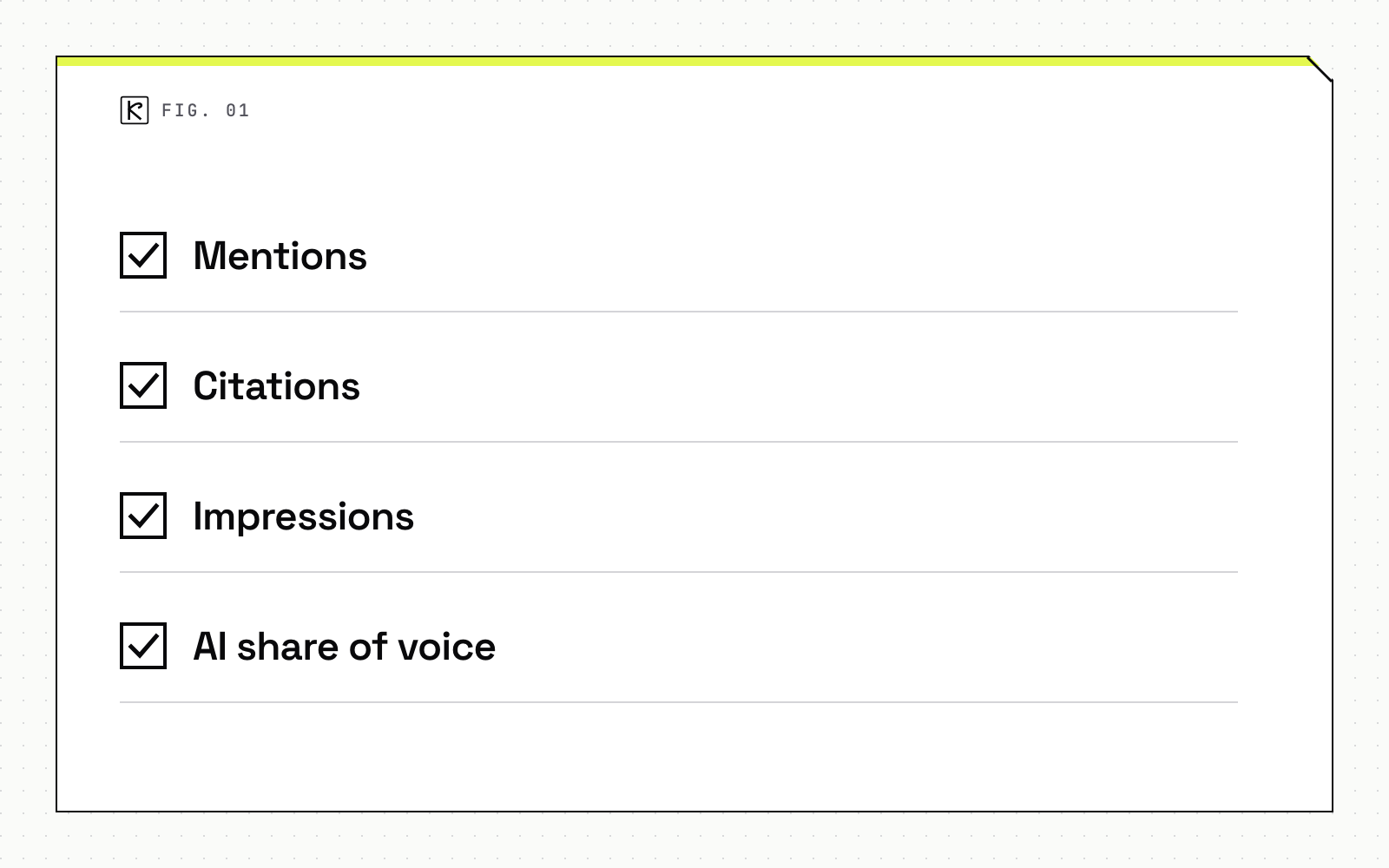
Ahrefs tracks four metrics, and they are a sensible baseline:
- Mentions: how often your brand is named in answers.
- Citations: how often your pages are linked as sources.
- Impressions: an estimate of exposure, based on how often responses containing your brand are shown.
- AI share of voice: how often your brand is mentioned compared with competitors.
Impressions are an estimate, so keep them out of any claim that needs precision.
Start with manual checks and a fixed prompt set
You can start with a spreadsheet and an hour. Manual checking is the first method in the Ahrefs audit: ask ChatGPT, Perplexity and Google the questions your customers ask, and record what comes back.
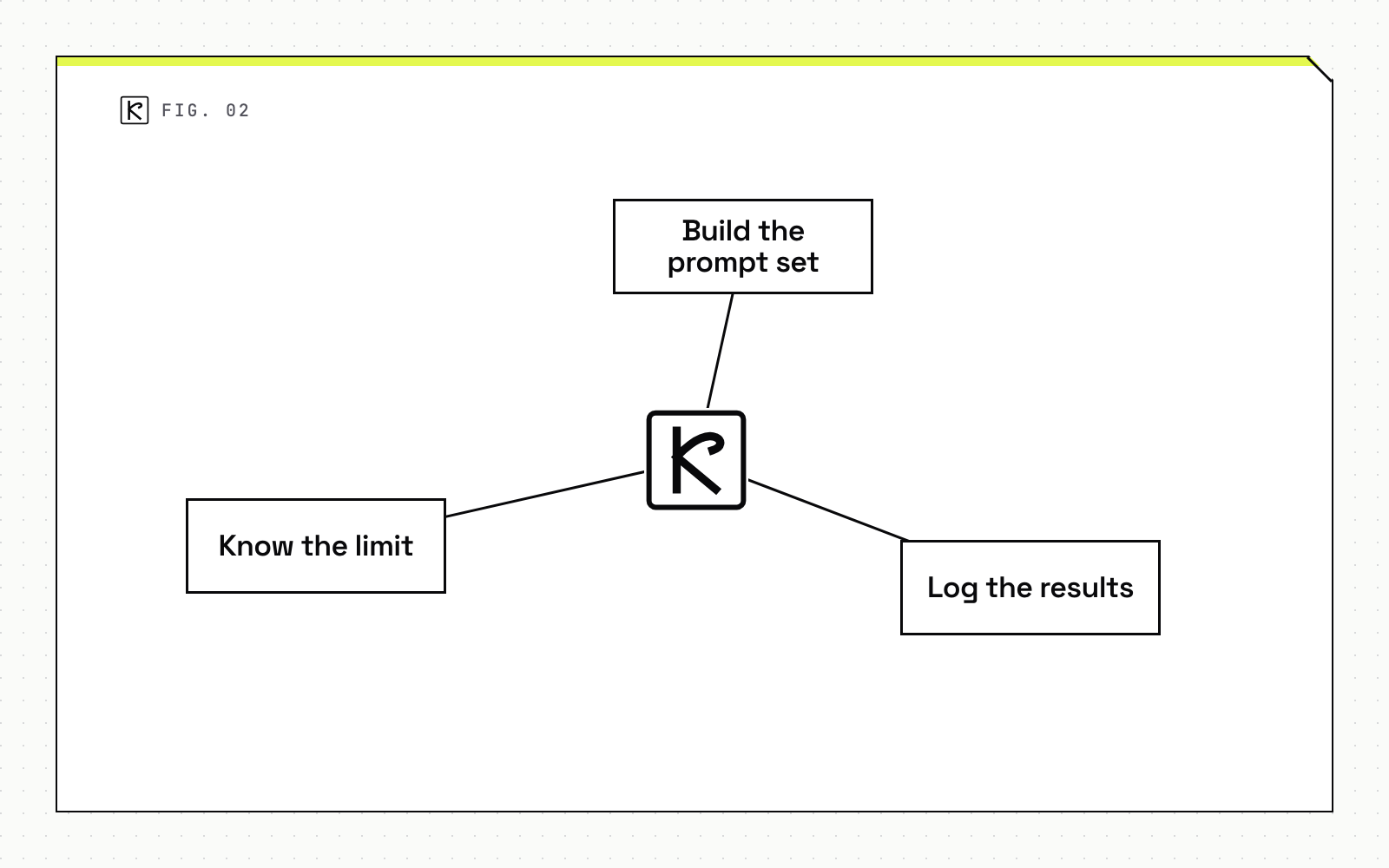
Build the prompt set
Write 15 to 30 questions in your customers' words. Mix two types:
- Branded: "Is [your brand] good for X?" These show how you are described.
- Unbranded: "What's the best way to do X?" These show whether you appear when nobody asks for you by name.
Then freeze the list. Change the questions every month and you can't compare months. Add new questions only as a clearly labeled second set.
Log the results
Use one row per prompt, per assistant, per date:
| Prompt | Assistant | Date | Named? | Linked? | Accuracy or sentiment note |
|---|---|---|---|---|---|
| Best way to do X | Assistant A | 2026-10-08 | Yes | No | Described correctly |
Add a short note on accuracy and framing. Ahrefs lists accuracy, sentiment, differentiation and authority positioning as qualitative dimensions worth recording, and a wrong description is a finding even when the mention count looks healthy.
Know the limit
Manual checks have a ceiling. Per the Ahrefs audit, "manual checks can't scale and are easily skewed by model updates or personalized responses." Two people asking the same question can see different answers, and the same person can see a different answer after a model update. Run each prompt the same way each time, note the date, and don't read a single run as a verdict.
What tools can and can't tell you
Tools solve the scale problem. They don't solve the precision problem. Ahrefs documents how its Brand Radar collects data (page updated February 26, 2026), and the description is a useful template for questioning any vendor.
How tools collect data
Brand Radar builds its prompt set from People Also Ask questions, which come from real searches, and from semantic fanout, which expands queries by meaning for coverage. It runs roughly 14 million to 24 million prompts per platform each month across ChatGPT, Perplexity, Gemini, Copilot and others, and harvests responses from free, publicly available web interfaces.
The stated limitations
The same page lists limits plainly:
- Coverage is strongest for English-language content.
- Models sometimes produce hallucinated or malformed links, and these aren't filtered out.
- Metrics are "directional indicators, not exact traffic counts."
- Long-tail and niche prompts aren't captured comprehensively.
That last point matters most for small and specialized businesses. If your customers ask narrow questions, a tool built on broad prompt sampling may not see them. Your own fixed prompt set can cover that gap.
How to choose
Before you buy, ask any vendor how prompts are sampled, how often they run, which interfaces they read from, and whether they filter bad links. Pay for those answers, not for a dashboard score. Be wary of any tool that reports a single precise "visibility score" without explaining the sample behind it.
Tie citations to traffic
A citation is not a visit. The Ahrefs audit makes the point directly: "just because a page is well-cited among AI responses does not mean people will click on it."
Cross-reference your cited pages with your analytics. Look at referral traffic from AI assistants, then compare the pages that get cited with the pages that get clicked. Pages that are cited often but rarely clicked may be answering the question so completely that the reader has no reason to visit. That isn't necessarily bad. It does change what you report.
Access matters here too. If you block an assistant's crawler, you may be removing yourself from its sources, so review AI crawlers and your robots.txt choices before you read a drop in citations as a content problem.
Share of voice and cadence
AI share of voice is your mentions divided by the mentions of you and your competitors across the same prompt set. It only works if the prompt set is identical for everyone you compare. Build it from your frozen list and add two or three named competitors.
How often should you measure? The guidance varies. The Ahrefs audit says to measure "monthly if you have the bandwidth," and otherwise quarterly. Its brand-mentions guide recommends weekly visibility checks and monthly strategic reviews. A reasonable middle path for a small team is a monthly full run of the prompt set, plus a quick weekly look at a handful of priority questions. Choose one rhythm and keep it, because consistency matters more than frequency.
Report honestly
When you report to a client, a boss or yourself, state the method with every number: the prompt count, the assistants, the dates, and whether the figure came from manual checks or a tool. Label tool figures as directional. Report trends over several periods, not a single reading.
Don't promise that any change will produce a given number of citations. Nobody controls what an assistant says on a given day. What you can report truthfully is whether your brand is named and linked more often than last quarter, on the same questions, and whether the description is accurate.
If you want help setting up this kind of tracking alongside your content work, Kallos Labs covers it under SEO and AEO.
Conclusion
Keep mentions and citations apart, freeze your prompt set, log every run with a date, and read tool data as directional. Add analytics so you can see whether citations turn into visits. Do that for three months and you'll have a trend you can defend.
Frequently asked questions
What is the difference between an AI mention and an AI citation?
A mention is your brand named in the answer text, and a citation is a link to one of your pages as a source. Track them separately, because an answer can do one without the other.
Can I track AI citations for free?
Yes, by hand. Run a fixed list of customer questions through each assistant and log whether your brand is named or linked. It doesn't scale and is skewed by personalization and model updates, but it costs nothing.
How often should I measure AI visibility?
Sources disagree. One guide suggests monthly or quarterly audits, and another suggests weekly checks with monthly reviews. Pick a cadence you will keep and hold the prompt set constant.
Are AI visibility tool numbers accurate?
Treat them as directional. A major vendor describes its own metrics as directional indicators, not exact traffic counts, with English-language bias and incomplete long-tail coverage.