LLM API data privacy in 2026: zero retention, residency and vendor terms
Both major vendors keep API data for up to 30 days by default. Zero retention needs approval, covers only some endpoints, and residency splits storage from processing.
By default, both OpenAI and Anthropic keep API inputs and outputs for up to 30 days. Zero data retention (ZDR) is an approved arrangement, not a setting, and it covers only some endpoints and features. This guide is based on the vendors' own documentation as of October 2026. Check your contract before you promise a client anything.
Why LLM API data privacy comes down to four questions
A client asks, "Does the model keep our data?" The honest answer depends on four things.
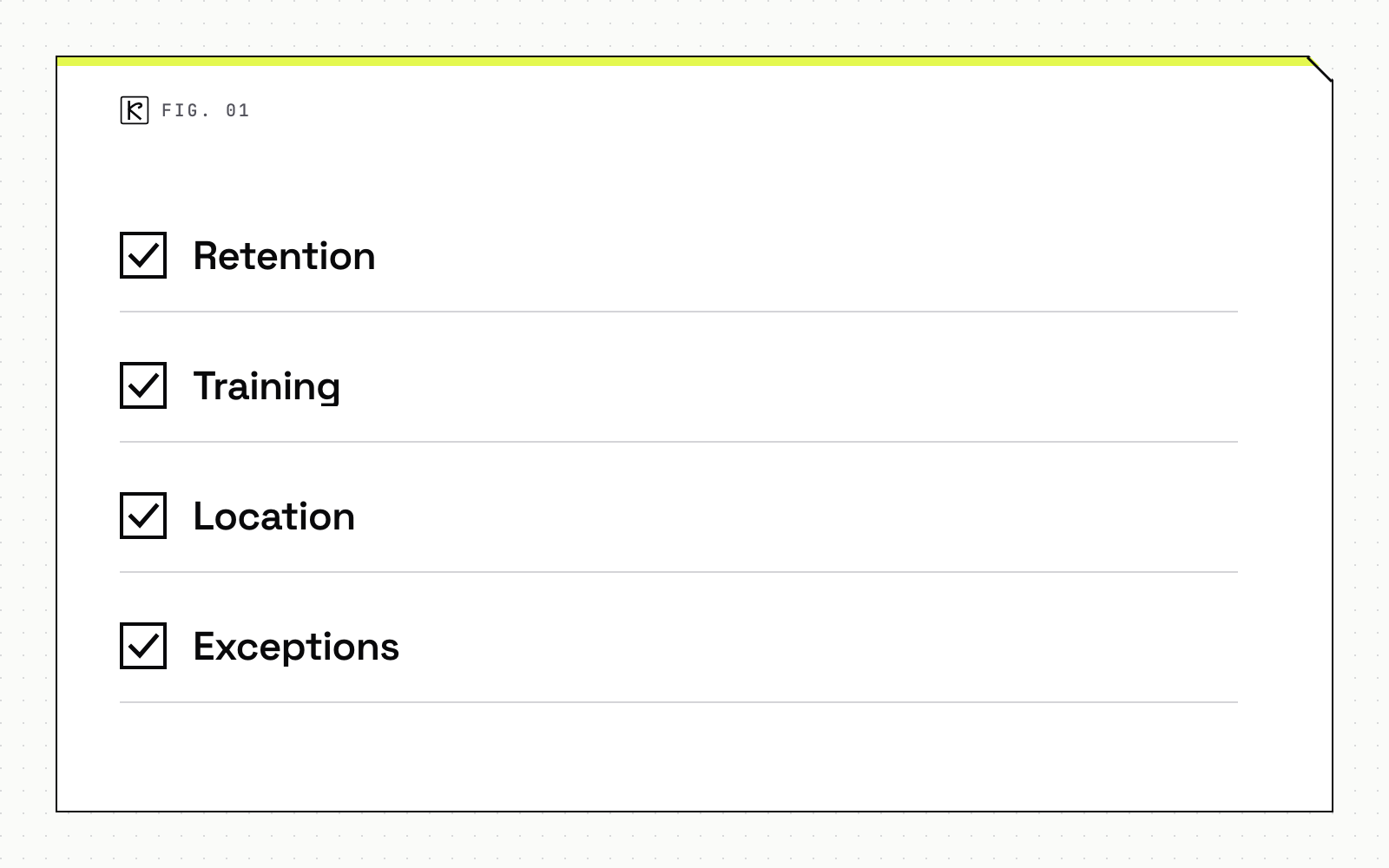
- Retention: how long the vendor stores your prompts and outputs.
- Training: whether that data is used to improve models.
- Location: where requests are processed and where data sits at rest.
- Exceptions: which features fall outside the promise you were given.
Treat them as four separate controls. Vendors document each in a different place, and a good answer on one says nothing about the rest.
Retention and training are separate controls
Retention is about storage. Training is about use. People mix them up constantly in client conversations.
Default retention
Anthropic says it automatically deletes API inputs and outputs from its backend "within 30 days of receipt or generation". The listed exceptions are Files API storage, agreements such as zero data retention, enforcing its Usage Policy, and legal requirements. The article is dated July 1, 2026.
OpenAI describes abuse monitoring logs that are generated for all API feature usage. They may contain prompts, responses and derived metadata. They are retained for up to 30 days, unless longer retention is required by law or to protect services or third parties from harm.
Training
OpenAI states that data sent to the API is not used to train or improve its models unless you explicitly opt in, effective March 1, 2023. Anthropic's retention page commits that retained data is never used for model training without your express permission.
Flagged content is kept longer
Zero retention doesn't erase everything. If Anthropic's automated trust and safety systems flag a chat, inputs and outputs may be kept up to 2 years, and classification scores up to 7 years. OpenAI notes that some flagged inputs can be retained for review even when ZDR or Modified Abuse Monitoring is on.
What zero data retention covers
ZDR means the vendor does not store your prompts and outputs after the response is returned. The details differ by vendor, and none of it is automatic.
It is approved, not switched on
OpenAI offers two controls that exclude customer content from abuse logs: Zero Data Retention and Modified Abuse Monitoring. Both are subject to prior approval by OpenAI and acceptance of additional requirements, and you contact sales to check eligibility. Under ZDR, the store parameter on /v1/responses and /v1/chat/completions is always treated as false.
Anthropic's ZDR is reviewed and applied per organization. It applies to the Messages and Token Counting APIs for eligible features, and Claude Teams and Enterprise product interfaces are not ZDR-eligible.
It is endpoint specific
OpenAI lists these endpoints as ZDR-eligible, with limitations: /v1/responses, /v1/chat/completions, /v1/images, /v1/embeddings, /v1/audio, /v1/moderations, /v1/realtime and /v1/completions. It lists these as not eligible because they keep application state, often until deleted: /v1/files, /v1/batches, /v1/fine_tuning/jobs, /v1/vector_stores, /v1/conversations and the Assistants and Threads endpoints.
The model can change the answer
Anthropic designates Claude Fable 5.1, Claude Mythos 5.1, Claude Fable 5 and Claude Mythos 5 as Covered Models. They require 30-day data retention and are not available under ZDR unless Anthropic expressly authorizes it. An organization without the required retention setting gets a 400 invalid_request_error. An organization with ZDR can enable 30-day retention for one workspace only, and other workspaces keep zero retention.
Features that quietly step outside zero retention
The risky part of ZDR is usually the feature you add later. Anthropic's eligibility table says features marked "No" are typically stateful, and that the API does not block them under ZDR. Using one is a choice to step outside your arrangement for that data.
- Batch processing: 29-day retention, because async storage is required.
- Files API: files are kept until you delete them or they expire.
- Code execution: container data is retained up to 30 days.
- MCP connector and agent skills: data is retained per the standard policy.
Some features are eligible with a small footprint. Prompt caching does not store prompts or outputs, and its cache representations are held in memory for the cache TTL. Structured outputs are marked "Yes (qualified)": only the JSON schema is cached, for up to 24 hours since last use. If you route traffic through caching and model routing, check each feature against the table before you enable it.
Data residency: where it runs versus where it is stored
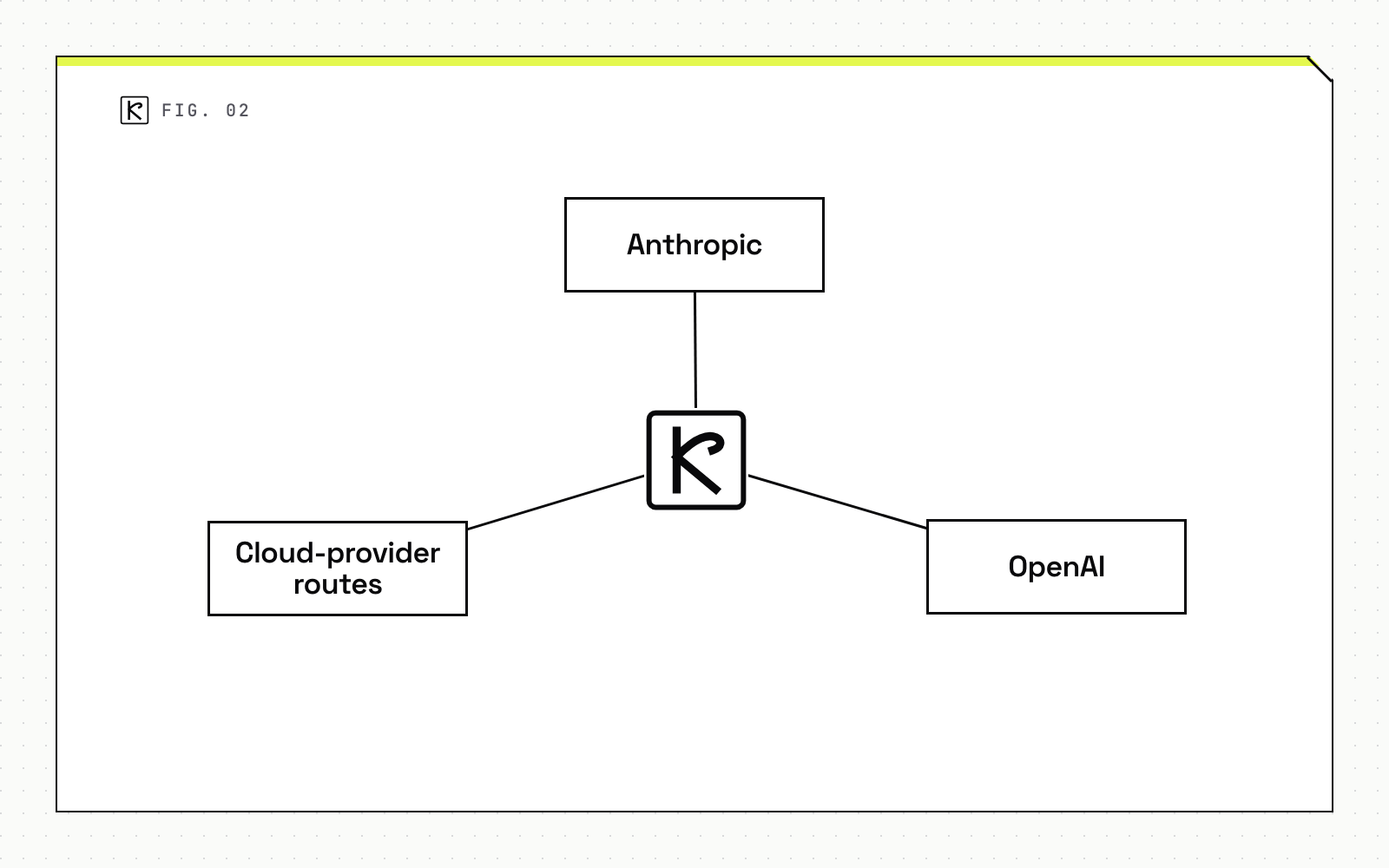
Residency has two halves, and vendors name them differently.
Anthropic
Anthropic's data residency page separates two settings.
- Inference geo sets where inference runs, per request or as a workspace default.
"us"keeps inference on US infrastructure, and the default"global"allows any geography. It needs Claude 4.6 or later, and US-only inference is priced at 1.1x the standard rate. - Workspace geo sets where data is stored at rest. It is fixed when the workspace is created, and only
"us"is available.
OpenAI
OpenAI lists the United States and Europe (EEA plus Switzerland) for storage and processing. Australia, Canada, Japan, India, Singapore, South Korea and the United Kingdom are storage only. The United Arab Emirates offers storage and processing with additional approval. Non-US regions require approval for Modified Abuse Monitoring or ZDR and a Modified Retention amendment.
Cloud-provider routes
On Amazon Bedrock and Google Cloud, the cloud provider is the data processor for Claude, so that provider's retention and compliance terms apply. Region comes from the endpoint or inference profile, not from inference_geo.
Checklist before you ship
Run through these before you tell a client their data is protected.
- Get the arrangement in writing, per endpoint and per model. "ZDR enabled" is not specific enough.
- Map every feature you use against the vendor's eligibility table. Files, batches and code execution are the usual leaks.
- Choose residency when you create the project or workspace. Anthropic's workspace geo cannot be changed afterward.
- Send less. The cheapest control is not putting identifiers in the prompt. See choosing a model for a product feature for the other tradeoffs.
- Keep a person on sensitive actions. Which agent actions need a person covers where to draw that line.
- Re-read the terms every quarter. Vendor pages carry 2026 dates, such as Anthropic's retention article from July 1, 2026, and the covered-model list can change.
If you are scoping an AI feature and need this mapped for a specific client, get in touch.
Frequently asked questions
Does an LLM API train on my data by default?
No, according to both vendors' current documentation. OpenAI says API data is not used for training unless you opt in, and Anthropic says retained data is never used for training without express permission. Training is a separate control from retention.
Is zero data retention automatic?
No. OpenAI's ZDR and Modified Abuse Monitoring need prior approval and additional requirements, and Anthropic applies ZDR per organization by arrangement. Ask the vendor before you assume it covers your account.
Does data residency mean my data never leaves a region?
Not necessarily. Providers split storage from processing. OpenAI lists several regions as storage only, and Anthropic separates inference geo from workspace geo, so read which of the two a setting controls.
Who is the data processor if I use Claude through Bedrock or Google Cloud?
The cloud provider. Anthropic's documentation says the cloud provider is the data processor on Amazon Bedrock and Google Cloud, so that platform's own retention and compliance terms apply.